


There’s nowhere in the world like Japan.
From the moment I first stepped foot in Tokyo, I felt I was on a whole other planet. The neon, the noise, the sheer number of people: it was overwhelming, for sure, but in a thrilling, rather than a terrifying, way.
I had high expectations for my time in the country. Practically everybody I knew who had been to Japan had come back and announced it was their favourite place in the world. I wondered if it could possibly live up to the hype, or if I’d built it up so much in my head that I could only be disappointed.
I wanted to write this specific post about Japan, because my biggest surprise from my trips here has been just how different it was to what I’d expected.
Everyone says Japan is bonkers, right? That every street corner offers something outrageous, every vending machine sells something you can’t even imagine, and that life here is chaotic and confusing. I was bracing myself for sensory overload and utter madness.
The reality? Japan is kind of, just, normal. There are moments when it feels mind-boggling — especially those first few days in Tokyo! — and times when you have absolutely no idea what is going on, but it’s not like that most of the time. In fact, outside of the cities, I found it to be incredibly peaceful.
So did I love Japan? Absolutely. And every time I’ve returned, I’ve fallen for this country even more. My most recent trip — exploring the little-visited island of Kyushu over three weeks — was one of the best I’ve ever taken.
Today, I’m going to share with you what it’s like to travel in Japan, so you can be more prepared than I was. These are my favourite type of blog posts to write — you can browse my growing collection of them on my What’s It Like to Travel In? page — as they allow me to blend a detailed travel guide with random observations, fun stories, travel tips, and missteps to avoid.
Let’s get started.
It’s Going to Be Overwhelming for the First Few Days
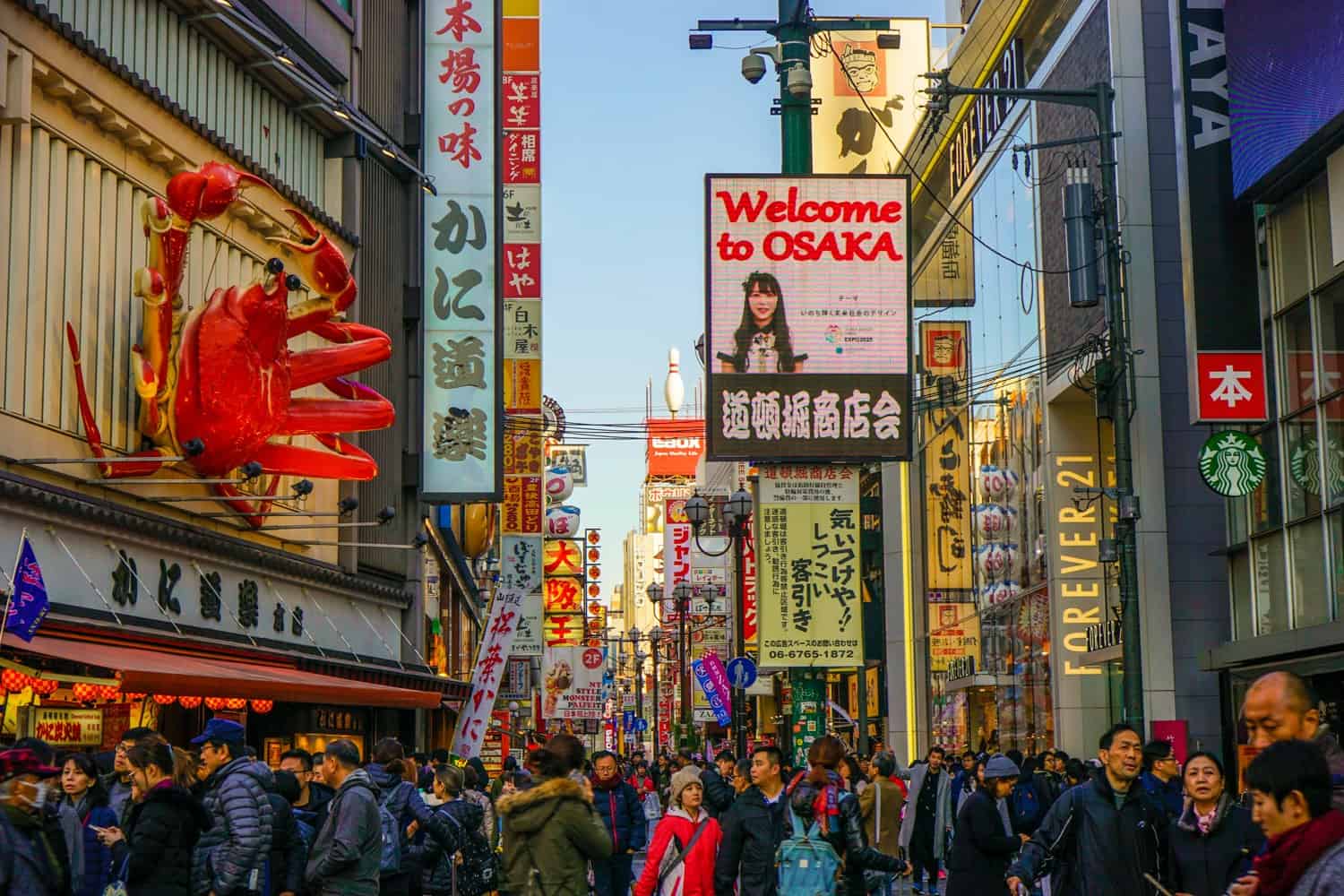
Does my photo of Osaka look like the exact opposite of peaceful?
Most people kick off their Japan adventure in either Tokyo or Osaka, as that’s where most of Japan’s international flights arrive. These two cities are some of the most overwhelming in the country, so you shouldn’t be surprised if your first few days hit you with a heft dose of culture shock.
You can expect bright lights, neon signs, loud noises, unfamiliar smells, and crowds of people: this is the chaotic Japan you’ve been dreaming of.
The added problem, however, is that many travellers to Japan have taken a long-haul flight to get there and the jet lag can be brutal. I personally had the worst jet lag of my life in Tokyo, and felt like I was wandering around in a dream the entire time, unable to process what was going on around me.
The good news is that the sensory overload doesn’t last for long, and you’ll soon get used to how Japan works.
Just maybe see if you can add an extra day or two to the start of your trip to help with the jet lag and culture shock.
Japan Really Isn’t That Weird
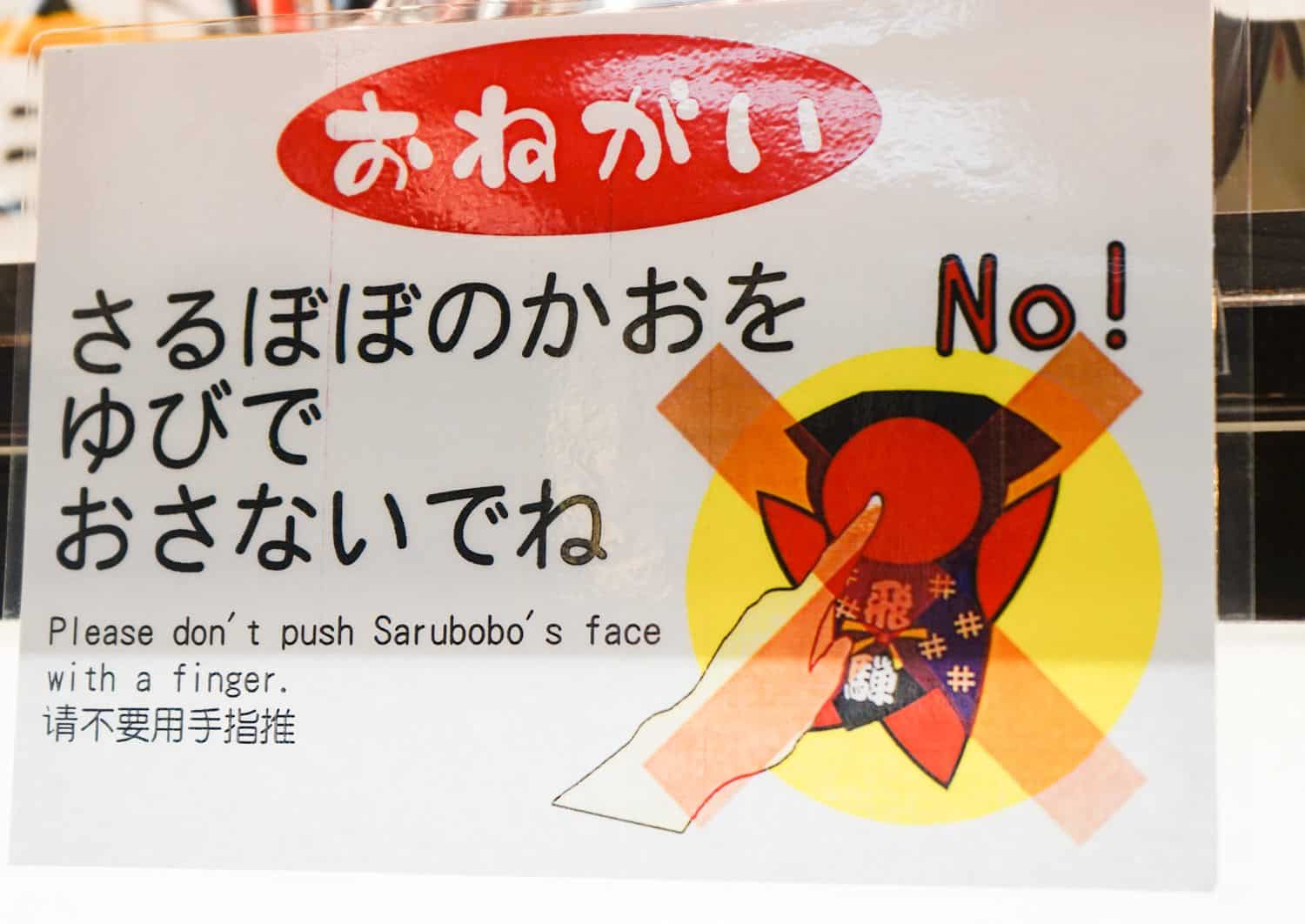
Now, I don’t know about you, but when I first started planning my trip to Japan, I prepared myself to see things. Strange things. Unexplainable things. Extraordinary things.
And… I didn’t.
I arrived in Tokyo, fully expecting to hit the ground and start taking photos of a thousand peculiar sights. I planned on barely sleeping during my trip, because I thought there’d be so much unfamiliarity to absorb.
Nope.
I landed in Tokyo and it felt like a big city. A regular city. A familiar city. Most definitely a busy city, but I wasn’t like, Wow! This place is ~*cRaZyYy!!*~.
Which isn’t to say it wasn’t special — I adored Tokyo — but just that it felt like a normal city filled with normal people. I didn’t run into people cosplaying on the streets, I wasn’t served by robots in restaurants, I wasn’t surrounded by outlandish fashion choices, I didn’t spot vending machines filled with used underwear.
Honestly, Japan was no more weird than any other country I’ve been to. It has some quirks, sure, but what country doesn’t?
The Food is Going to Blow Your Mind
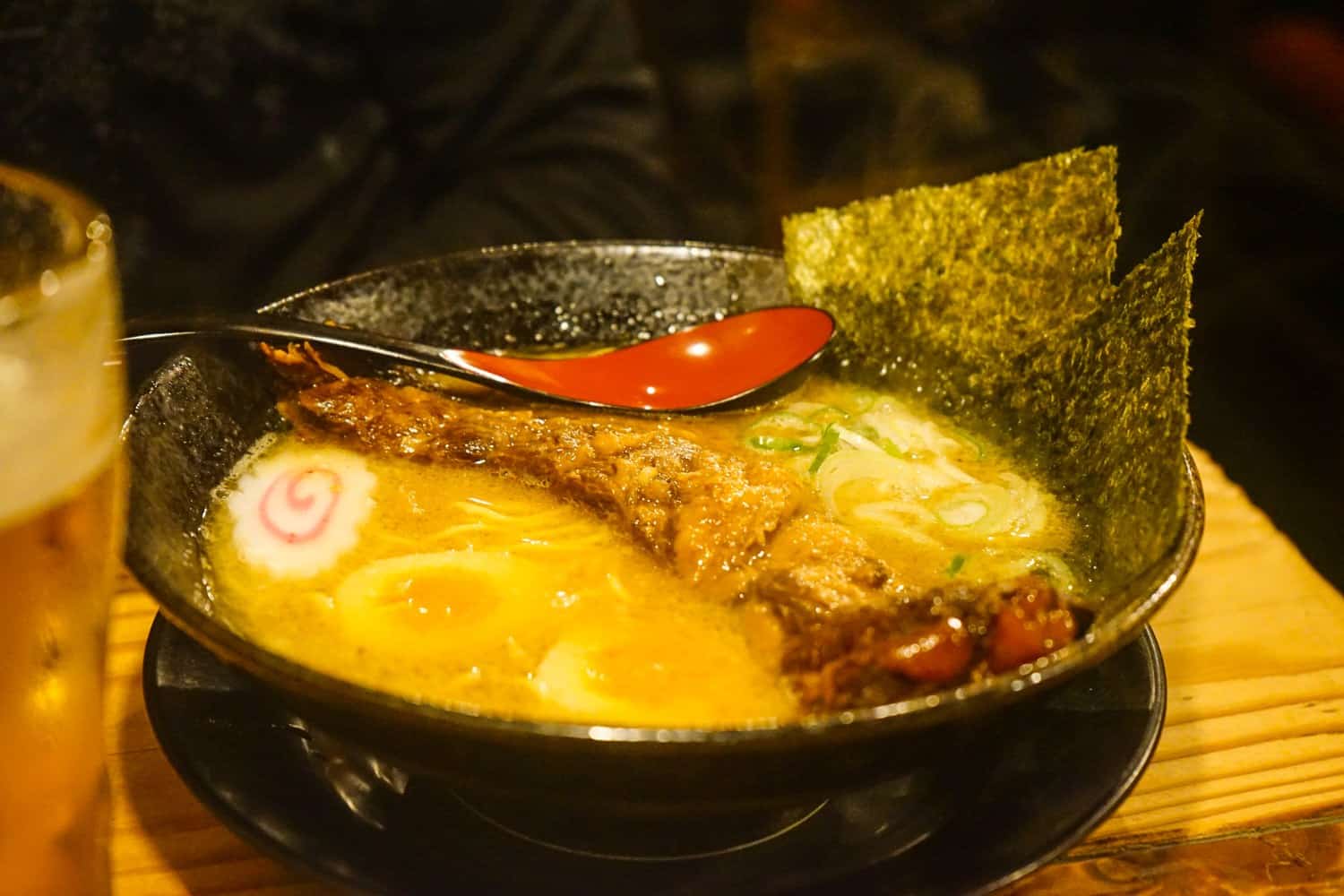
I’m still talking about the incredible meals I devoured in Japan!
Whether it was the pork rib ramen in Osaka, the crispy takoyaki in Tokyo, or the fresh-as-hell sashimi in Kanazawa, I couldn’t get enough of the foods I ate in Japan.
But the best part of all? This country is one of the safest places to be brave with food.
If you’re ever going to point at a menu and hope for the best, do it here. Hygiene standards are high, ingredients are fresh, and prices are low: if you don’t like a dish, you won’t feel like you’ve blown your budget on it, and you’re not going to get food poisoning from it, either.
I tried all kinds of interesting dishes as I made my way around Japan, from pufferfish jerky to pickled quail eggs to my first kaiseki (a traditional multi-course Japanese meal). In Hakone, we even ate a jet-black egg that had been boiled in hot springs at the base of Mount Fuji.
And You Can Find Some Truly Unusual Dishes Here

Wondering what that is in my photo? That, my friends, is horse sashimi. Yes, I ate raw horse while I was in Japan, and it was… not good!!!
You can even find chicken sashimi in this country, although I strongly advise against trying it, as it’s the leading cause of food poisoning in Japan, which feels very leopards ate my face.
One of the most fun aspects of travel in Japan, however, was getting to sample lots of local delicacies, some of which can only really be found in one or two cities. For example, horse sashimi is the dish of Kumamoto, so I knew that I had to sample it while I was in town.
On my first morning in Fukuoka, Dave and I wandered into a local-looking restaurant, pointed at a set menu option, and found ourselves accidentally eating soft-shelled turtle porridge for breakfast!
The Train is the Best Way to See the Country
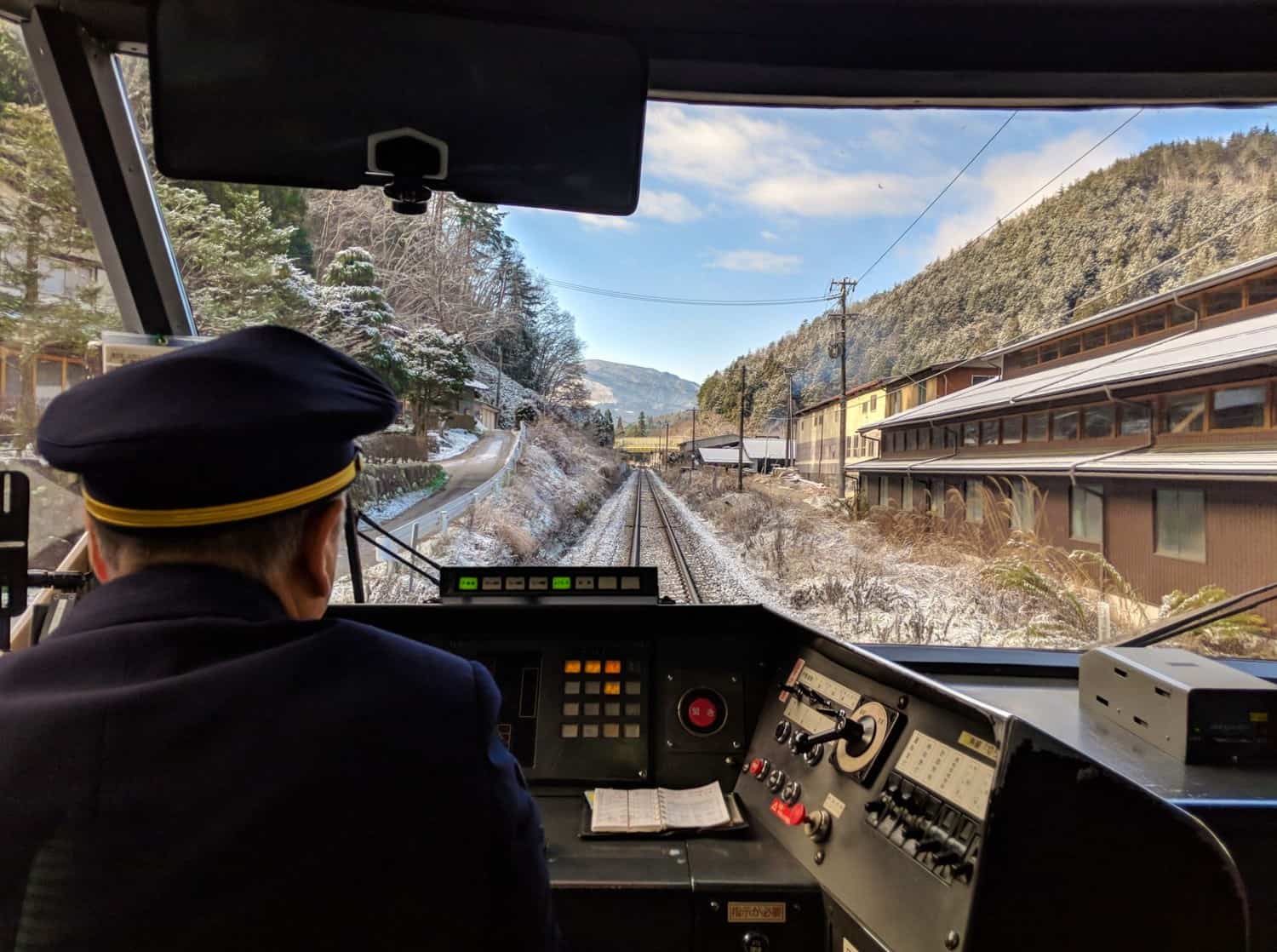
Travelling by train across Japan is such an iconic experience. The trains are fast and punctual, the rail network is extensive, and it’s altogether a comfortable and convenient way to get around. It’s a huge expense if you’re going to be travelling in Japan on a budget, but I think it’s a cultural experience that’s worth splurging for.
Dave and I still talk about the time when our train from Hiroshima to Miyajima was delayed by 15 minutes. The station announcer was so apologetic that you’d have thought he’d accidentally killed somebody!
Unfortunately, Japanese trains are expensive. On our 2026 trip to Japan, for example, I spent $150 to take the Shinkansen from Osaka to Tokyo and that was just one journey! As you might imagine, costs can quickly skyrocket.
Japan does have the option of buying a JR pass, which grants you unlimited rides across the whole country over a set time period. For the vast majority of visitors to the country, it won’t save you money in comparison to buying single one-off tickets, but I actually recommend buying one if the difference in price isn’t going to be much.
The benefit is a much higher level of convenience: being able to jump on any train you feel like in the unreserved carriage, not having to worry about missing your train because you can just take another one, and being able to take a spontaneous day trip if you discover somewhere beautiful on TikTok at the last minute. It does give you so much peace of mind, but will likely cost an extra hundred dollars in comparison to buying individual tickets.
But the Regional Rail Passes Can Save You Money

If you’re not sold on the national JR Pass, I’d encourage you to take a look at the regional passes that you can buy instead. You may find that they’re a better fit for your trip.
For example, this year, I spent a week in Kyushu and paid ¥25,000 for a seven-day Kyushu Pass. I used it to travel from Fukuoka to Nagasaki, to Kagoshima, to Kumamoto, to and from Mt. Aso, and back to Fukuoka. The Shinkansen from Nagasaki to Kagoshima alone is priced at ¥18,000, so we easily saved tons of money with our passes.
I also paid for the Kansai-Hiroshima Area Pass ¥17,000 for five days of usage. This one is a no-brainer if you plan on travelling between Kyoto, Osaka, and Hiroshima, as the Shinkansen from Kyoto to Hiroshima is priced at around ¥12,000, so if you’ll be doing a round trip, it’s a no-brainer. Throw in a trip to Osaka or a side trip to Nara or Miyajima Island, and you’ll save so much money!
Make Sure You Pick up an IC Card

If you take one piece of practical advice from this entire guide, let it be this: get an IC card as soon as you arrive in the country.
Seriously. The importance of an IC card in Japan cannot be overstated. On my first visit to the country, I decided not to get one and it made for an unhinged Tokyo metro experience. For example, in Tokyo, the subway lines are operated by one of three different companies, so if you switch from one line to another, suddenly the single ticket you bought for one company is now invalid.
I consider myself an experienced traveller, and yet, during the 15-odd times I used Tokyo’s metro on that first trip, I didn’t manage to buy the correct ticket even once. Isn’t that hilarious? Instead, every single ticket barrier flashed up an error and I’d have to find a staff member to help me out, then go and pay the correct amount (or sometimes receive a refund)!
With an IC card, however, you can freely use every single line without needing to worry about logistics.
And it’s not just for the subway, and it’s not just for Tokyo.
You can use your IC card across the entire country, in convenience stores, vending machines, supermarkets, restaurants, buses, trams, ferries, trains, and… By the end of your trip, there’s a good chance your IC card will be your most used travel tool.
So while you can technically travel Japan without an IC card, I can share from experience that it’ll make your trip wildly more complicated than it needs to be.
Confession: I Was Baffled by Tokyo’s Metro
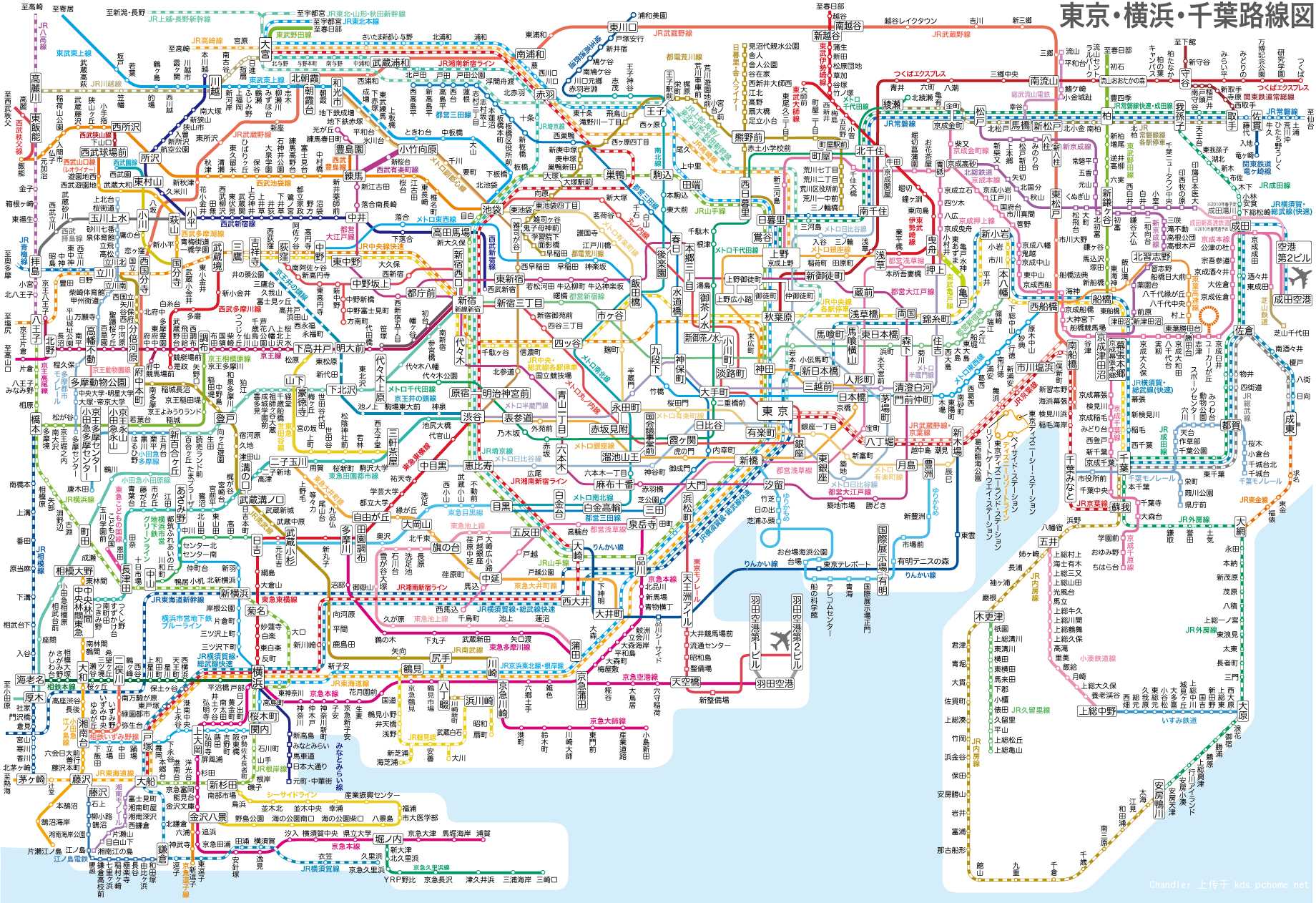
On our first day in Japan, Dave tweeted: “If you think you’re a competent traveller and would like to be humbled, can I suggest trying to figure out the Tokyo metro?”
I’ve muddled my way around a hell of a lot of subway systems around the world, but Tokyo’s was the first to leave me well and truly flummoxed.
To start with, the stations are enormous. When I was staying close to Shibuya station, it would regularly take me a solid 30-60 minutes to figure out where the right exit was! I found it a lot easier to find the platforms, as they’re much better signposted, especially once you’re inside the station.
The stations are incredibly busy, too. The top 20 busiest train stations in the world are all found in Japan. Shinjuku station — the busiest — sees over three million people transiting through it every single day. I can’t even comprehend that many people passing through a single building, let alone every day.
We used Google Maps to help us navigate the metro stations, but I’d recommend taking note of the floor number as you do so, as there’s often many basement levels and walking around those will never lead you to an exit!
You Must Buy Bento Boxes for the Train Rides
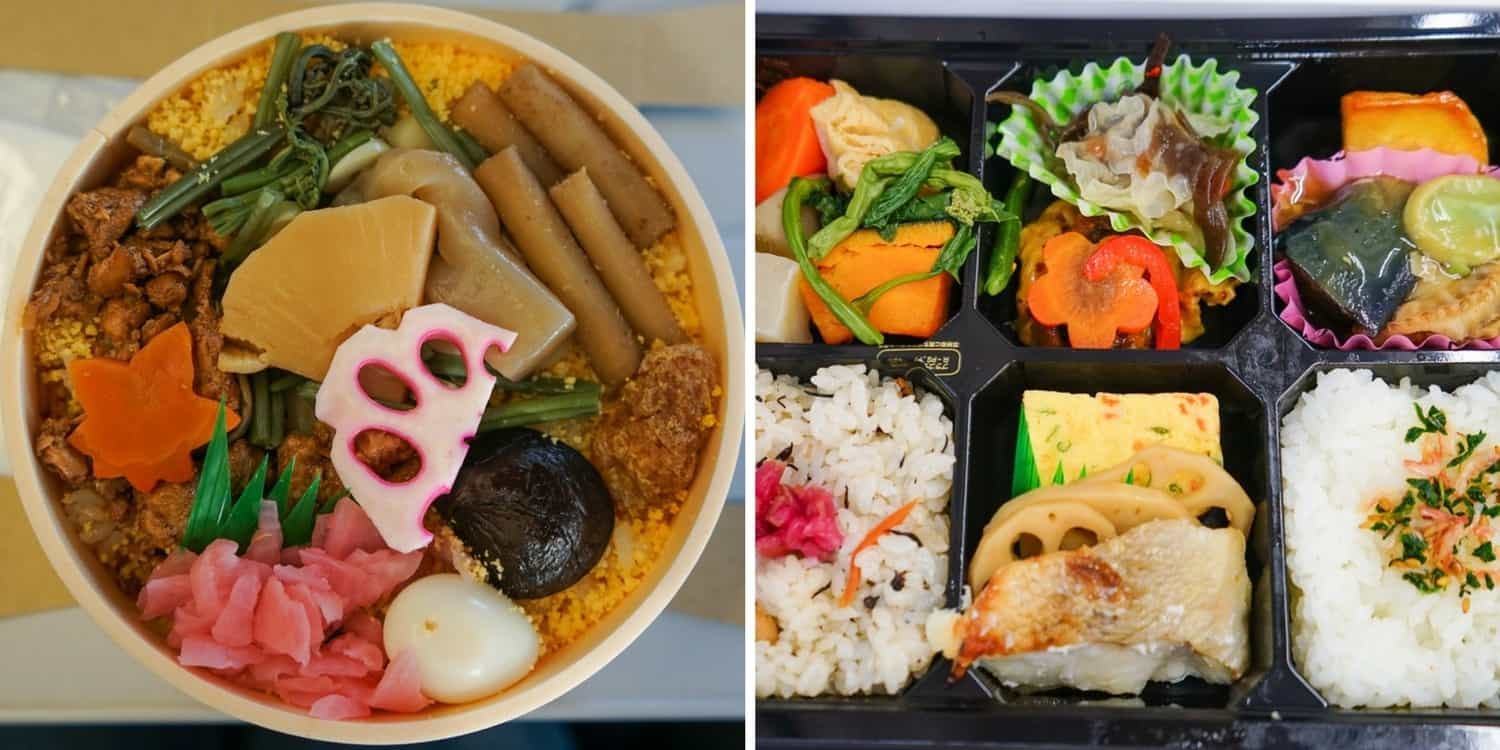
This was such a highlight from my travel days in Japan.
Train stations across the country sell bento boxes to passengers, and I’ve spotted them in small local stations and throughout the massive transportation hubs. You can think of them as a little packed lunch, neatly packed with rice, pickles, meat, fish, and seasonal vegetables.
They’re usually made fresh daily and often highlight local specialties. Some stations even have entire shops dedicated to bento boxes, making it fun to browse and see what each region offers.
Buying a bento is easy. Most stores have pictures or displays, so you can just point at what looks good. Prices are reasonable, portions are perfect for a single meal, and it’s a far more interesting option than the usual convenience store sandwich.
On long train journeys, a bento box is part of the experience, letting you sit back, watch the scenery, and enjoy a taste of the region. I’ll confess that these likely won’t be a culinary highlight from your time in Japan, but it’s a cool local experience, so I recommend doing it at least once.
Try to Keep Your Luggage Compact

If you’re going to be travelling around Japan by train, it’s going to make things significantly easier if you’re travelling light. Backpacks are also going to improve your experience if you’re happy to carry them, as it can be hard to find elevators in train stations and carrying suitcases up many flights of stairs isn’t going to be fun.
Dave and I usually travel with Osprey Farpoint 40l backpacks, and have taken them on all our trips to Japan.
There are luggage racks at the end of each car on the trains, but they’re actually for reserved luggage, and those seats book out almost instantaneously. Instead, you’ll most likely have to keep your luggage at your feet while you’re on the train. There’s overhead storage for bags, but it’s a shelf and quite small, so you wouldn’t want to put anything enormous up there.
If that sounds a bit overwhelming, I want to reassure you that there’s a substantial amount of legroom on the Shinkansens in Japan. As you can see from my photo, I was more than comfortable with my backpack at my feet. For your reference the dimensions of both mine and Dave’s backpacks are 55cm x 35 cm x 25 cm, with the depth of the bag being 35 cm.
As long as your luggage will be of a similar depth, you should be totally fine!
If you know you’re going to shop, shop, shop while you’re in Japan and couldn’t possibly travel with a carry-on sized bag, there are options! In particular, you can use a luggage forwarding service like Yamato Transport, where you’ll have your bags collected from your current hotel and sent to your next one without you needing to worry about it.
It’s actually super-common for visitors to do this, although I personally am not a fan, as it can sometimes take two days for your luggage to arrive, and I know I’d find that inconvenient.
Don’t Forget to Bring Cash With You

The first time I visited Japan, way back in 2018, cash was king.
In 2026? These days, I’d say that cash is… prince? Haha.
The good news is that cities are more card-friendly than ever: most hotels, big restaurants, and shops now take credit cards and contactless payments. I used my card at fancy sushi spots in Tokyo with zero issues. On the other hand, small restaurants, temples, rural shops, markets, and street stalls often still prefer cash — or only accept cash — so carrying some yen saves you stress.
Small bills and coins are useful, too, as many tiny cafes, food stalls, and vending machines can’t give change for big notes. I’ve awkwardly fumbled 10,000-yen bills at a ramen shop before: it’s all part of the experience, but having smaller bills avoids that panic.
I generally make sure I have around ¥15,000 in cash with me at all times, just in case, and top-up my stash using the ATMs from 7-Eleven (they have the best rates and work with foreign cards).
There’s No Need to Leave a Tip

I’m looking at you, American readers!
The good news is that tipping isn’t a thing in Japan, and trying to do so can even make things a little awkward.
When Dave and I found ourselves with a surplus of coins that were weighing us down, we left them on the table in a restaurant to get rid of them. A couple of minutes after leaving, one of the staff members chased us down in the street to hand our money back to us! I’d thought that was an urban myth when I’d heard of it happening to other people.
In Japan, staff are paid a good wage. They take pride in their work and see it as part of the job, so leaving extra money isn’t expected and can lead to confusion.
Instead of tipping, a simple thank you (arigato gozaimasu!) and a slight bow or tip of your head goes a long way. You’ll receive excellent service regardless, but showing appreciation verbally is culturally appropriate and warmly received.
It’s Worth Getting Out of the Main Cities
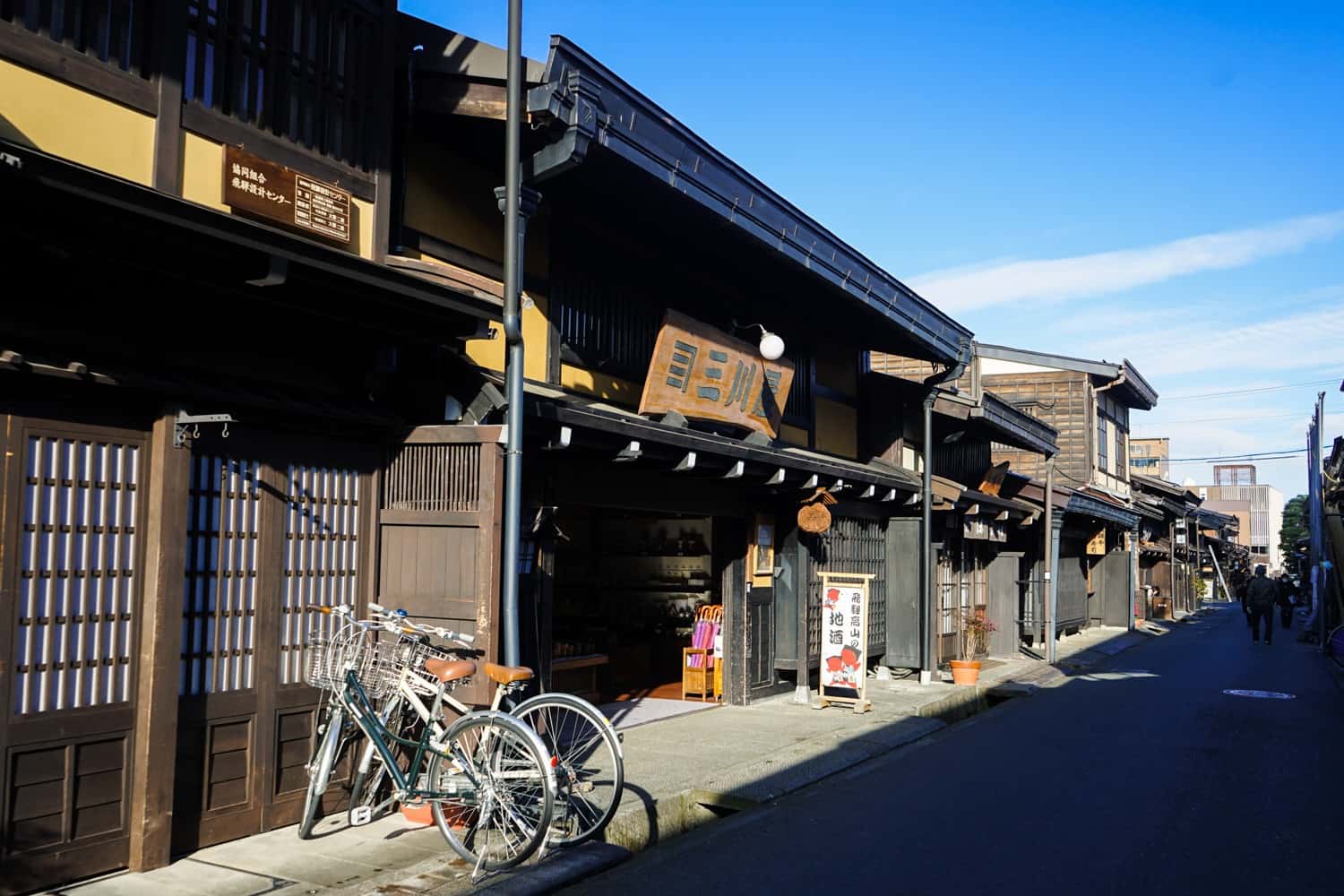
A lot of people on their first visit to Japan devise an itinerary that’ll take them to the three big hitters: Tokyo, Kyoto, and Osaka. And while those cities are undoubtedly popular for a reason, I found myself enjoying the lesser-known spots just as much.
Wandering around the town of Yamanouchi in freshly-fallen snow was a wonderful experience, Takayama was the perfect place to learn about traditional Japanese architecture, and beautiful Miyajima Island was the most relaxing stop on my first trip to the country. The castle in Okayama had far fewer tourists than Osaka Castle, and cycling the base of Sakurajima volcano is the best thing I’ve done in the country.
Even if you don’t have a huge amount of time in Japan, I’d still recommend jumping on a day trip or two to explore outside of the huge cities. Hit up Nara as a day trip from Kyoto, head to Hakone to see Mount Fuji, or Nikko for ancient temples, as a day trip from Tokyo, or set off for Miyajima Island for some respite on a day trip from Hiroshima.
There’s a Lot of Unethical Animal Attractions

Japan is the land of animals being treated badly, unfortunately.
As you travel across the country, you’ll be struck by how many animal cafes you can visit. There’s hedgehog cafes, otter cafes, owl cafes, capybara cafes, alpaca cafes, ferret cafes, penguin bars, and the vast majority of them are not doing great things for the animals’ health.
In Japan, owl cafes offer the chance to sit beside a tethered owl that’s been forcibly domesticated and will never be allowed the opportunity to fly. A cat cafe in Tokyo was shut down after it was discovered owners were keeping 60 cats within a 30 square metre rom. The penguin bar in Tokyo keeps four penguins captive in a tiny enclosure at the back of a smoky bar.
I went to a hedgehog cafe in Tokyo and came away feeling conflicted by the ethics of me having done so, and decided I wouldn’t repeat the experience.
Even visiting the snow monkeys ended up being a disappointment for me. The animals were herded towards tourists by staff, fed in order to keep them from leaving the hot springs, and generally seemed to be distressed that they couldn’t get away.
Japan has also experienced international condemnation for a whole host of animal welfare violations, from whaling to the Taiji dolphin hunt, and if you’re an animal-lover, it can be tough to process.
If in doubt, steer clear of any animal-based attractions in Japan.
Japan’s Vending Machines are Not as Wild as You Expect
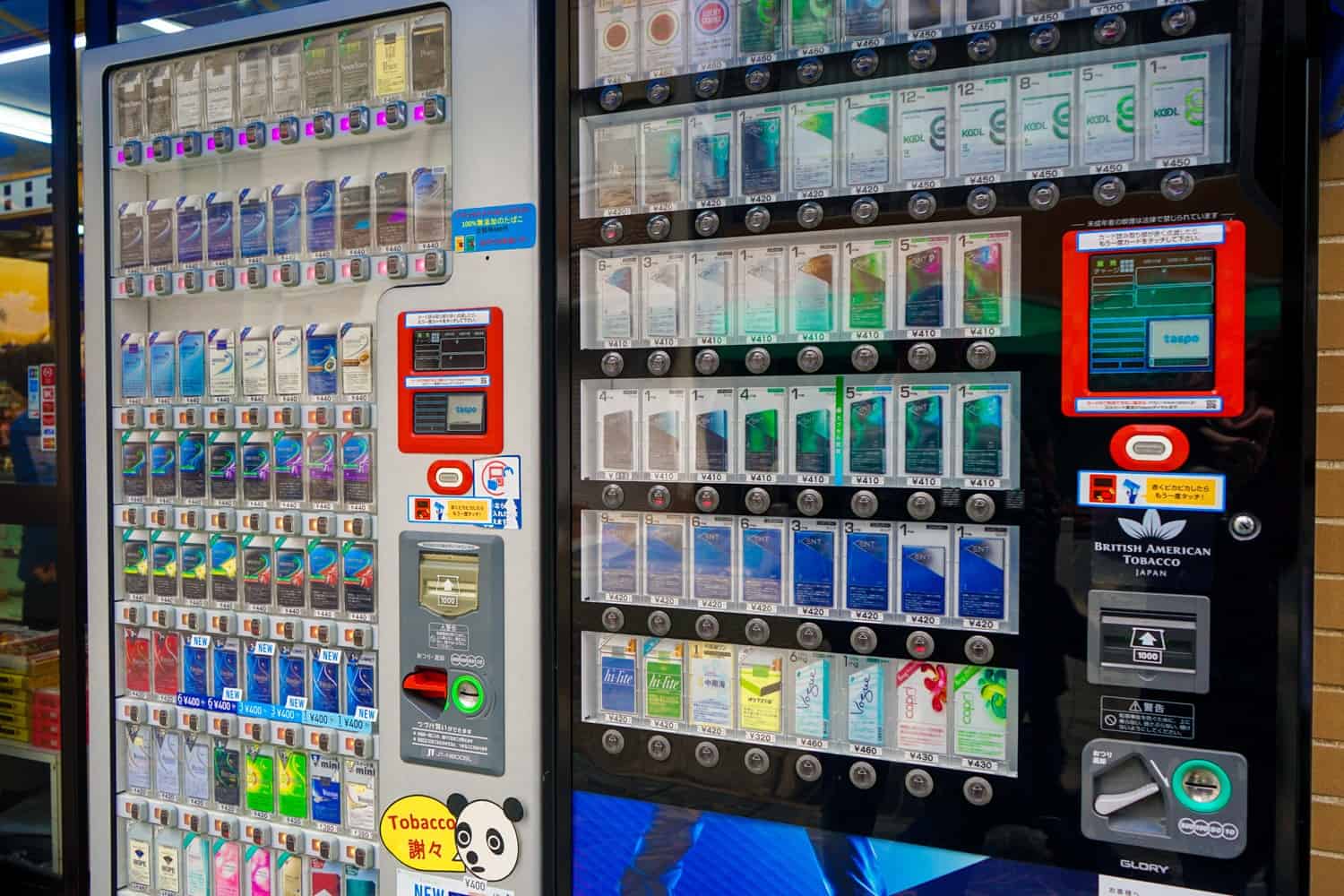
Before I stepped foot in Japan, I’d heard about their vending machines. I knew that they blanketed the country and could be found on practically every street. In fact, there’s over five million of them in Japan, which means there’s one for every 23 people in the country. Odds are, their presence will be one of the first things you notice when you first arrive.
Now, the vast, vast majority of these vending machines sell drinks, from the delicious-but-gross-sounding electrolyte-filled Pocari Sweat to hot coffee in a can — and they’re a fun, easy way to stay refreshed while you’re exploring.
Most likely, though, you’ve heard that you can find anything in a vending machine in Japan. I’ve heard of vending machines selling things like puppies, live lobsters and beetles, a Coke that freezes into a slushy when you open it, umbrellas, surgical masks, mystery boxes, pizzas, ties, wigs for dogs, origami, and yes, used women’s underwear.
In reality, you have to work hard to find a vending machine that sells any of those items, so don’t expect to be wowed by the contents of every one you see. Most likely, 99% of the vending machines you encounter will sell the same old drinks that all the other ones do.
And You’ll Probably Get Weirdly Excited Over the Toilets

Everybody falls in love with Japanese toilets! Once you’ve experienced them, you’ll likely get home and start researching how much it would cost to put one in your own bathroom.
So what’s so life-changing about them?
They have so many features!
When I was in Japan over winter, I loved that the toilets came with a seat warmer! On top of that, there’s a built-in bidet and blow-dryer. You can adjust where the water sprays, the temperature of it, and the amount of pressure it applies. You can even play music from the toilet if you don’t want anybody to hear what you’re doing in there, and some feature a deodoriser, too.
The buttons on the toilet are fairly self-explanatory, but every single one I used had a slightly different design and set of features, which kept things fun. Mystery toilet!
And The Toilets are Everywhere

I’m a huge fan of this aspect of Japan.
To my absolute delight, I quickly discovered that public toilets are everywhere in this country. Whether you’re visiting a tourist attraction, walking through a small park, or even strolling through the middle of a city, you’re never more than a few hundred metres from a toilet.
But more than that, you’re never more than a few hundred metres from a clean toilet. I couldn’t believe it: never have I been to a country where the public toilets are uniformly immaculate!
All that to say, you never need to worry about getting caught short in Japan. There’s toilets all over the country.
You’ll See a Lot of Stocky Cars in Japan
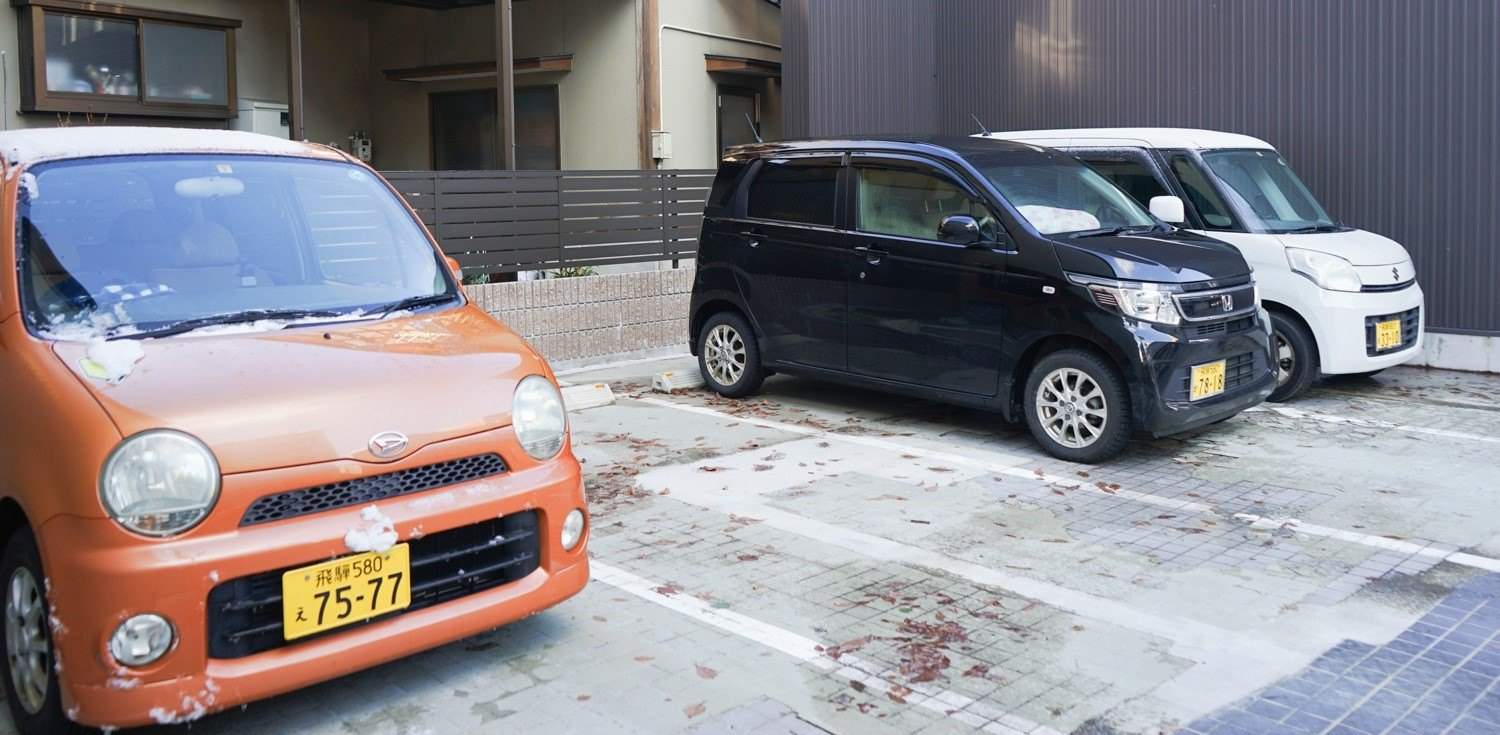
Why are the cars in Japan so squished and blocky?! I must have asked Dave this question a dozen times as we made our way around the country.
You’ll likely notice them immediately. So many of the cars in this country look like they’ve been dropped in a car crusher for a second, removed, then placed on the streets!
It turns out, there’s a reason for it. Japan’s cities are crowded, the streets are narrow, and parking spaces are at an absolutely premium. Car manufacturers therefore design Japanese vehicles to maximise their interior space while keeping the footprint tiny.
Practicality over aesthetics, but they’re still kind of funny to see.
It’s Not as Expensive as You Think
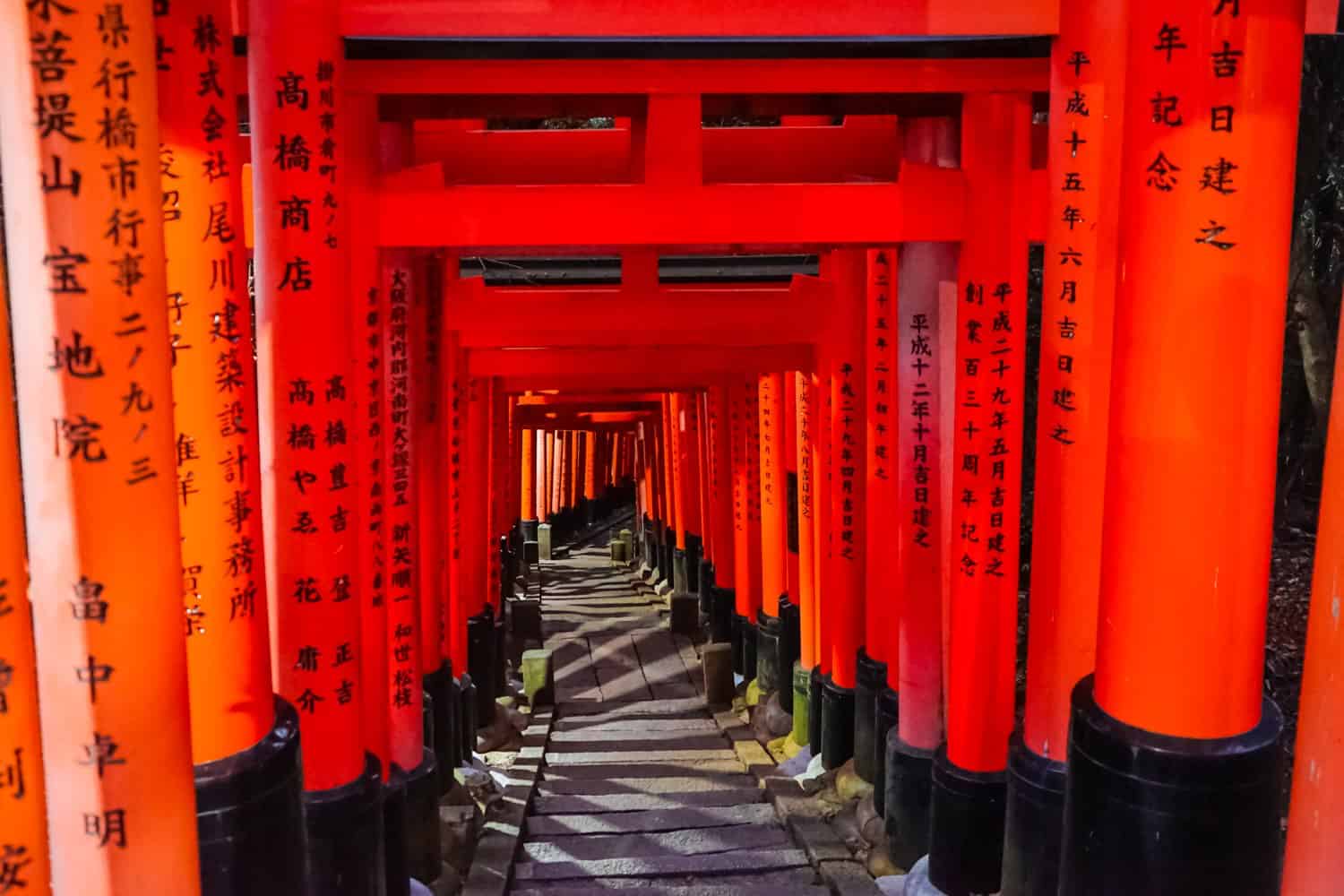
I put off travelling to Japan for years due to one simple reason: I didn’t think I could afford it.
To my great surprise, it ended up being much more affordable than I expected! In total, I averaged $100 a day while travelling as part of a couple on a mid-range budget. That included transportation, accommodation in hotels and guesthouses, entrance tickets to temples and attractions, food and drink, and travel insurance. I’ve definitely visited more expensive countries in the world.
For more information on my expenses, check out my detailed guide on how much it costs to travel in Japan.
There Are So Many Different Types of Accommodation
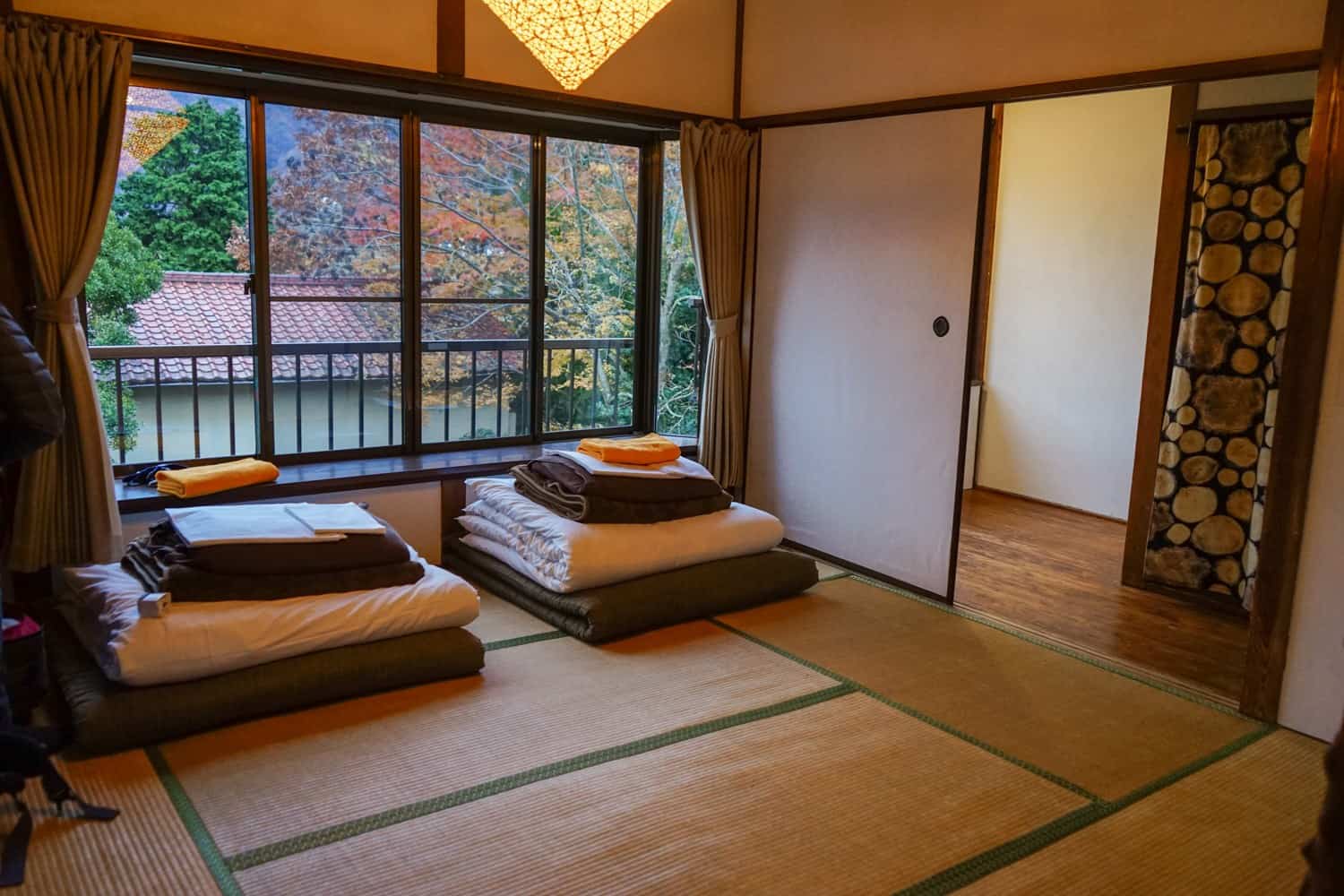
One aspect I loved about Japan travel is how many different types of accommodation there are to stay in. I tried to check out as many of them as possible.
I stayed in a capsule hotel, spent a night in a ryokan, slept on a tatami mat floor, hung out in family-run guesthouses, and checked out some pretty hipster hostels.
My biggest surprise was learning that sleeping on a tatami mat was so comfortable! I often opted for the tatami mat rooms over Western-style bedrooms, as they’re usually a couple of dollars cheaper, and they worked out to be just as comfortable. I actually found it super cool to be staying in a minimalist room without any furniture! My only complaint was the smell of the tatami mats — most people love it, but to me, it smelt like I was sleeping in a barn.
Staying in a ryokan was another exciting accommodation experience. These Japanese inns are generally known for being super-expensive, giving you the opportunity to experience a traditional local lifestyle. You’ll stay in a tatami mat room, bathe in a communal onsen, and tuck into a kaiseki with the other guests during dinner and breakfast. It was one of the coolest experiences I had in the country.
My final accommodation standout was a capsule hotel. I stayed here more for the novelty than the comfort levels, but it ended up being surprisingly cosy. My room had around 20 beds in small pods, all packed in together, but you still had a lot of privacy. I had my own little light in my capsule, my own power sockets, temperature control, and a curtain to close to keep people from peering in. These are a great way to save money in Japan, so I’d recommend trying them out if you’re going to be visiting on a budget.
I Felt Super-Safe in Japan
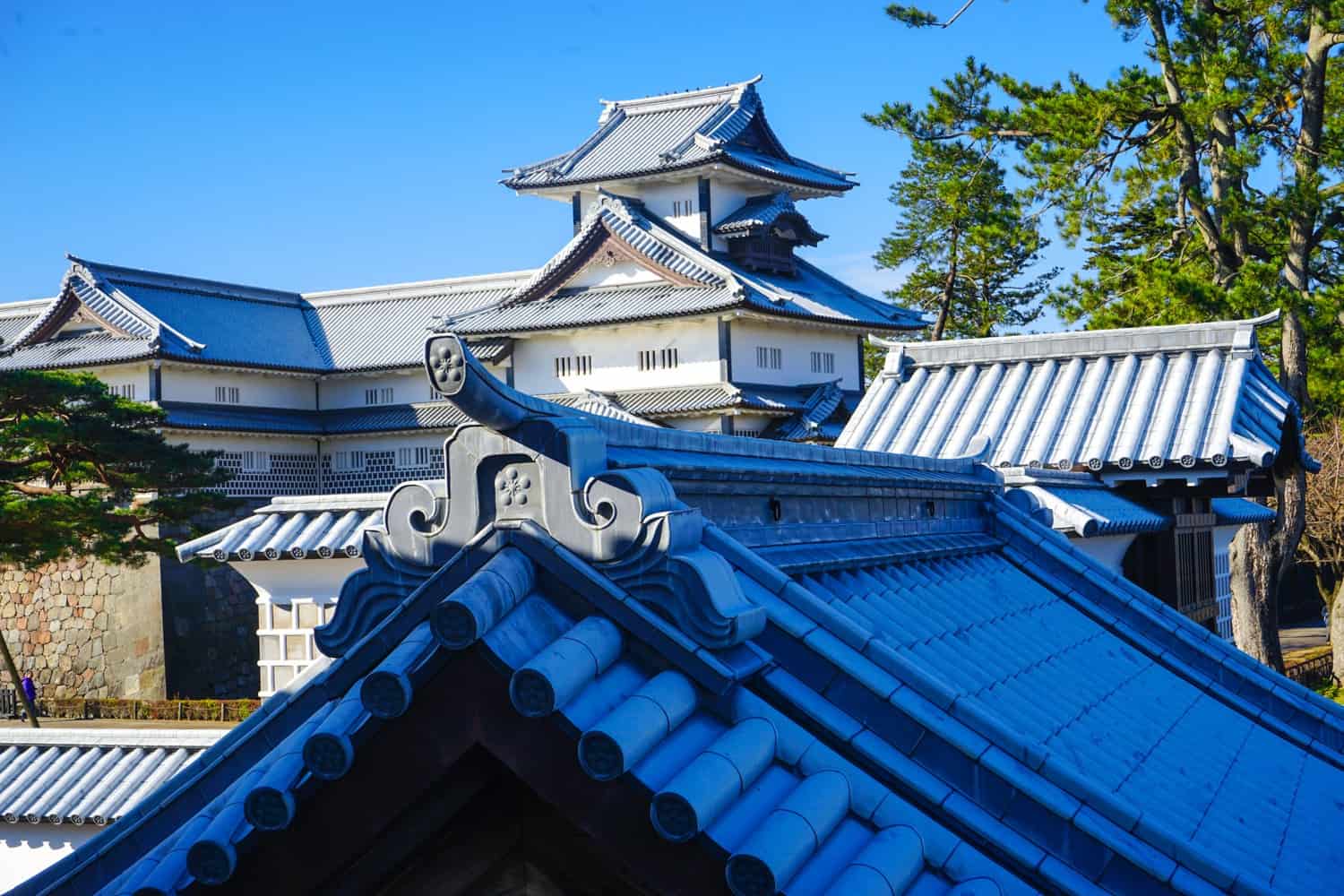
Japan has a reputation for being one of the safest countries in the world, and I certainly never felt in any danger while I was there. I felt perfectly safe exploring the country alone, walking around at night on my own, sleeping on the train with my bags at my feet, and carrying my expensive camera in the open. I felt safer in Japan than anywhere else I’ve been in the world.
Still, that doesn’t mean that you should grow complacent and let your guard down. As with any country in the world, you should still keep watch over your belongings, be wary of complete strangers that are taking a sudden interest in you, and be careful with your alcohol consumption. All that good stuff.
My fellow female travellers out there may want to utilise the women-only train carriages during peak travel times to ensure you’re away from any wandering hands — this is likely the only safety issue you’ll encounter in the country, although the odds of actually encountering it is very rare.
Keep your wits about you, take common sense safety measures, and you’ll have a wonderful time.
Yeah, You’ll Probably Get Shrined Out

As hard as it is to believe, there will come a time in your Japan trip where you simply won’t be able to look at another shrine.
At first, every torii gate feels magical. You’ll pause to admire the lanterns, cleanse your hands at the temizuya with great seriousness, make sure you bow and clap the correct number of times (two bows, two claps, one bow) and take approximately 571 photos of the wooden plaques upon which visitors have written their hopes and dreams.
Several days later, you’ll enter a shrine and think to yourself, yep, that’s definitely a shrine, and ponder whether you can be bothered taking a photo of it.
Unfortunately, you’ve just become shrined out.
Now, I love the shrines in Japan, and every time I visit a new destination in the country, I make sure to visit the two or three that are most beloved, but when you do that day after day after day… it can all get a bit samey.
Feel no shame if this eventually ends up happening to you; it happens to most of us eventually!
Winter is Going to Be Cold
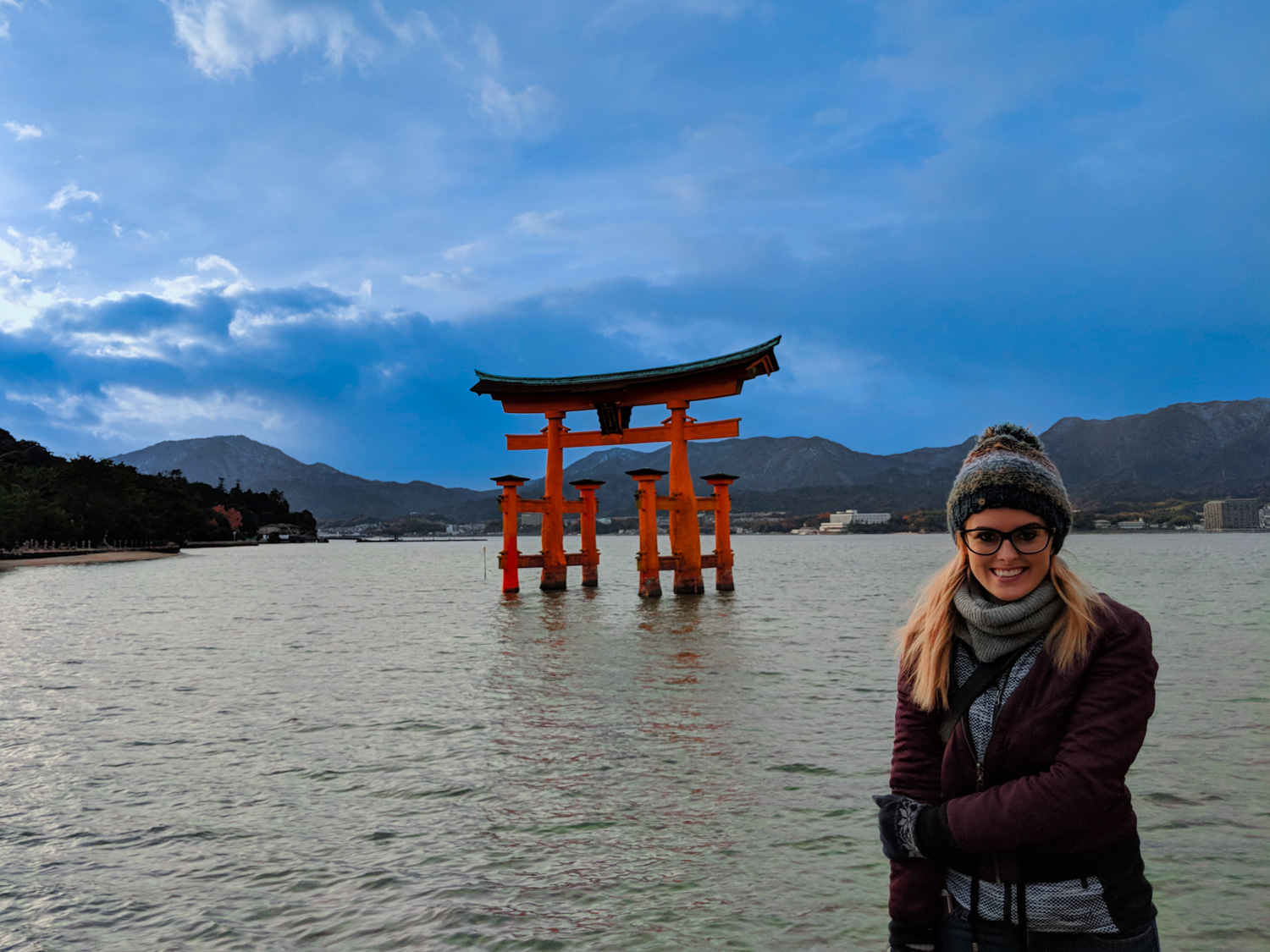
Japan gets freezing in the winter and scorching in the summer, and the autumn months bring the typhoons.
I visited in December and was so cold. So much colder than I thought I would be. Although I confess to having little tolerance to the cold, so most people wouldn’t struggle as much as I did. Temperatures hovered around the freezing mark, and it snowed in Hiroshima and Yamanouchi. I regularly wore five layers of clothing and still spent most of my time shivering.
Visiting during summer takes you to the other end of the temperature spectrum. It gets super-hot in the summer months, with temperatures hitting as much 40 degrees (100°F) some years.
This is a destination that’s best visited in the spring or autumn.
Don’t Fear the Onsens

One of the huge bonuses to visiting in the winter is getting to dive into Japan’s onsen culture.
Onsen is the Japanese word for hot spring, and you’ll find them scattered all over this volcanic country. Some are outdoors, some are inside, some are found in guesthouses, ryokans, and hotels, some are in public bathhouses, some are public, some are private, some are same sex, some are mixed gender.
The only rule is that you have to be naked.
Eeek! I know that a lot of visitors to Japan — myself included — might feel a little uncomfortable at the idea of jumping into a gigantic bath with a bunch of naked strangers. I strongly recommend pushing yourself a little out of your comfort zone, however, because it’s so liberating to do so.
Have any body image insecurities? This is one of the best ways to get over them, because here you are in a room with people of every conceivable shape and size, and absolutely nobody is paying attention to you or anyone else. They’re just bodies, after all.
I jumped in an onsen almost every night of my trip and it was so relaxing and comforting to do so. I also recommend looking for accommodation with on-site onsens, as it allows you a little more privacy. At my hostel in Hakone and my ryokan in Yamanouchi, I got to jump in the private couples onsen with my boyfriend, which was so much fun!
In theory, you’re not supposed to use the onsens in Japan if you have tattoos, although the rules have relaxed in recent years. If you have one that can’t be covered up with a bandaid, I’d recommend checking out Tattoo Friendly, which lists hundreds of Japanese onsens you can visit if you’re inked.
Prepare for the Earth to Shake, Rattle, and Roll

Japan is one of the shakiest countries in the planet, playing host to as many as 2,000 earthquakes per year. That’s an average of four earthquakes a day.
Not to worry: the vast, vast majority of the tremors are entirely undetectable, and I’ve yet to feel an earthquake while in the country.
At the same time, that doesn’t mean that you should be complacent to the risks. For example, I visited the city of Kumamoto in May 2026 and it was then struck by a magnitude 7.1 earthquake in July 2026 that killed 40 people and injured 350. It really brought the danger home to me because I could have easily been in the city when it struck.
This doesn’t mean that I think you should do anything dramatic like cancel your trip or spend your entire vacation bracing yourself for potential shakes, but I do think it’s important to be prepared.
I’m speaking from experience here: I grew up in a country that doesn’t get earthquakes so I was never taught what to do if you find yourself in one. When I then got caught up in my first ever earthquake in Taiwan, I had no idea how to react, to the extent that I had to open my laptop and google “what to do in an earthquake” while my bed was rocking back and forth. Not knowing how to respond made the experience so much more unsettling. So! What to do?
If you’re in your hotel room: Protect your head and hide beneath a sturdy table, if available. If there isn’t a table, squat low next to an interior wall (not an exterior one with windows), and away from anything that could fall on you, like a TV or painting. You could hold a cushion over your head for added protection. If the bed is low enough, you could crawl under that instead. Staying indoors is usually the safest option, as you could be hit by falling debris if you’re outside and the buildings in Japan are built to withstand strong earthquakes.
If you’re on a train: These will brake automatically as soon as they detect an earthquake so no need to worry there. Hold on to a handrail or the seat in front of you in case of sharp braking.
If you’re outside: Cover your head, move away from any buildings and glass, and once the shaking stops, move to a clear, open area with everyone else.
If you’re anywhere coastal: Assume there is a risk of tsunami and treat it with the urgency it requires. Head to higher ground, following the route indicated by tsunami evacuation signs (these are everywhere along the coast).
Odds are, you’ll be completely fine! Most people travel to Japan and don’t feel the earth shaking while they’re there. It’s just always better to know exactly what to do in the worst-case scenario
And Prepare Your Feet for Walking

I don’t know how it happens.
Every single time I go to Japan, I average 25,000 steps a day. Even when I plan for an easier day. Even when I get around using public transport. There’s something about this country that seems to land every visitor with aching soles and blisters.
On my most recent trip to Japan, my highest step day was 35,000 and my lowest was 10,000 (and that’s because I was sitting on the Shinkansen for most of the day). In terms of distances, you can expect to cover 10-25 km a day of walking (6-16 miles).
In other words, if you’re not super active in your everyday life, you might want to start training for your Japan trip! Make sure you’ve got some comfortable walking shoes, to start with, and take the time to fully break them in so they’re not going to give you blisters on your first day.
Try getting out and about before your trip to build up the muscles you’ll be using to walk. Gradually work to increase the amount of ground you can cover before your feet get sore. The last thing you want is to be in too much pain to go check out that shrine you’ve always dreamed of visiting!
Yes, the Convenience Stores are the Best

It’s the one thing that everyone knows to be true about Japan: the convenience stores are amazing.
Not only are they home to some absolutely delicious treats (I love the chocolate mint wheat puffs in my photo above!), but they also provide cheap and easy eats on the go (like the kelp onigiri in my photo; a staple of my travel days), while also selling baffling items that you’re not quite convinced anybody genuinely eats and enjoys (squid cartilage?!).
Yes, visiting a convenience store in Japan is a cultural experience, and you’ll likely end up visiting several every day of your trip. The three main options in the country are Lawson, FamilyMart, and 7-Eleven, and you’ll likely find one of them on every city block. To my delight, all three chains sell different snacks to the others! My favourite was Lawson and my least favourite was 7-Eleven, but all three still have plenty of offbeat, tasty items to try.
Annoyingly, You Probably Need to Plan in Advance

Want to eat some of the best Kobe beef in Kobe? Pose for photos at one of the many TeamLabs exhibitions? See Tokyo at sunset from Shibuya Sky? Visit the Nintendo Museum? Watch a sumo tournament? Eat at a Pokemon-themed cafe? You better have a reservation!
This really wasn’t a thing when I first visited Japan, so it was quite a shock to head back this year and realise that you really can’t get away with just spontaneously choosing what to do each day. And there was nothing I could do about it — I was already in Japan and many of the cool activities I was reading about were already sold out.
Honestly, it’s not the end of the world if you don’t do this, because there are so many amazing attractions in Japan that don’t require advance reservations, and I definitely don’t feel like my trip was made worse by not being able to do any of these hyper-popular activities. However, if there are certain things you definitely want to see or do, you are most likely going to have to sit there and refresh a sales page a month in advance to ensure you get your hands on a ticket.
I’d recommend doing your research several months (as some tickets go on sale four months in advance!) before your trip, if at all possible, to specifically come up with a list of activities that require you to make a reservation in advance. In general, these are going to be the theme parks, themed restaurants, TeamLabs or anything Instagram-y, and sporting events.
Be Cautious With Your Medication

There’s a whole bunch of medication in Japan that is illegal, and attempting to bring it into the country without permission could result in deportation or jail time if discovered.
Sigh.
I have ADHD and travelling with my medication makes me a criminal in many (most?) countries around the world. Unfortunately, Japan brings more of the same. If you want to take ADHD medication into the country, you need to apply several weeks before your departure date, and the whole process is an enormous pain in the ass. I was flying into Fukuoka, which is a less popular airport, so my application was approved in just 48 hours; it can take longer if you’re flying to Tokyo or Osaka.
In order to apply, I had to write to the Japanese Narcotics Control Department and send them a filled-in import form, export form, a letter from my doctor to confirm I have ADHD and need the medication, and attach photos of my medication bottle and my prescription. You can bring a maximum of 30 days’ worth into the country with you.
So what else can’t you easily bring into the country? Here’s the extremely long list of controlled medications on the official government website in Japan, and here’s the official application guidance with a link to the forms to fill in. Things that you need to get permission for include: lisdexamfetamine, pseudoephedrine (be careful of cold/flu medicine!), codeine, and oxycodone. Note that you can’t bring Adderall into the country at all.
The arrival process at Fukuoka Airport was kind of daunting. I had to hand my import form to the guy at immigration, who then called somebody to escort me into a room, where staff asked me about my ADHD, wanted to see the medication in my luggage, and consulted each other with serious expressions for 20 minutes while I tried my best look like the opposite of a drug smuggler. Nerve-wracking, even though I knew I wasn’t doing anything wrong!
Have you been to Japan? If not, do you dream of visiting one day?
Related Articles on Japan
🏯 How to Spend Two Weeks in Japan: An Itinerary for First-Time Visitors
💴 The Cost of Travel in Japan: My Budget Breakdown
🍣 15 Weird and Wonderful Things to Eat in Japan
😎 Hipster Harajuku: The Coolest Neighbourhood in Tokyo
🦔 Should You Go to a Hedgehog Cafe? My Experience in Japan
🐒 Why Seeing the Snow Monkeys in Japan Sucked
The post What’s it Like in Japan? 29 Travel Tips for 2026 appeared first on Never Ending Footsteps.
| <img src="https://a.feedblitz.com/f/?ap=&p=1059184&li=33382503&p=6a8c36626f49bcb9d4ed979ff850142e_12737&lctg=&stpe=static” border=”0″ style=”display: block; max-height: 12px !important” /> | |
|
<a href="https://a.feedblitz.com/f/?ap=&p=51043&li=33382503&e=&p=6a8c36626f49bcb9d4ed979ff850142e_12737&lctg=&stpe=default” rel=”nofollow” target=”_blank”> <img src="https://a.feedblitz.com/f/?ap=&p=51043&li=33382503&e=&p=6a8c36626f49bcb9d4ed979ff850142e_12737&lctg=&stpe=default&li_coord=desktop&collapse_width=640″ border=”0″ width=”640″ style=”display: block; width: 100% !important; max-width: 640px !important;” class=”lihide”/> |
|
|
<a style="display: block; max-width: 116px; max-height: 15px;" href="https://a.feedblitz.com/f/?ap=&p=451604&li=33382503&e=&p=6a8c36626f49bcb9d4ed979ff850142e_12737&lctg=&stpe=static” rel=”nofollow” target=”_blank”> <img src="https://a.feedblitz.com/f/?ap=&p=451604&li=33382503&e=&p=6a8c36626f49bcb9d4ed979ff850142e_12737&lctg=&stpe=static” border=”0″ style=”display: block; min-height: 1px”/> |
<a style="display: block; max-width: 19px; max-height: 15px;" href="https://a.feedblitz.com/f/?ap=&p=582674&li=33382503&e=&p=6a8c36626f49bcb9d4ed979ff850142e_12737&lctg=&stpe=static” rel=”nofollow” target=”_blank”> <img src="https://a.feedblitz.com/f/?ap=&p=582674&li=33382503&e=&p=6a8c36626f49bcb9d4ed979ff850142e_12737&lctg=&stpe=static” border=”0″ style=”display: block; min-height: 1px”/> |

Leave a Reply